CertainTeed’s FORTIFIED Roof
What is CertainTeed's FORTIFIED Roof
FORTIFIED (or “FORTIFIED Home”) is a voluntary resilient-building program developed and administered by the Insurance Institute for Business & Home Safety (IBHS).
The idea is to go beyond standard building codes, using specific materials plus stricter installation practices, to strengthen homes against extreme weather — e.g. high winds, hail, heavy rains, storms.
A “FORTIFIED Roof” is a roof assembled from components and techniques that meet the IBHS FORTIFIED Roof standard (a subset of the overall FORTIFIED Home criteria)
CertainTeed’s Role & Offering
As of May 2025, CertainTeed announced that it is providing a full roofing system that complies with the IBHS FORTIFIED Roof requirements.
CertainTeed’s system includes a suite of compatible products (deck tape, underlayments, shingles, ventilation, edge caps) that are “FORTIFIED‑compliant” — meaning they satisfy those component-level criteria
Two newer products introduced by CertainTeed specifically to support FORTIFIED compliance:
CertaSeam™ Roof Tape — for sealing joints in the roof deck to prevent water intrusion during wind events
SwiftStart® SA Starter Shingle — a self-adhering rolled starter shingle that helps improve the water seal at edges
The list of CertainTeed components that are (or will be) FORTIFIED-eligible is broad, including:
Waterproof underlayments (e.g. WinterGuard PRO, RoofRunner, DiamondDeck, Vycor “ice & water” membranes)
A variety of shingle types (e.g. Landmark TL, Landmark PRO, Presidential Shake IR, etc.) that meet wind or hail criteria
Ventilation products, edge caps, hip & ridge caps to round out the system
Important note: using individual “FORTIFIED‑compliant” products does not in itself guarantee the roof will receive a FORTIFIED designation — the full system must meet all criteria (materials, installation, documentation) and be installed by certified contractors.
Key Requirements / Criteria
To achieve FORTIFIED Roof certification (or designation), several things must align:
Certified Contractor / Installer
The contractor must be certified under the FORTIFIED program to perform installations that can qualify for the FORTIFIED rating.
As of November 1, 2025, only FORTIFIED-certified contractors may perform eligible installations under participating programs.
Complete System Approach
It’s not just about a strong shingle; the entire roof assembly must comply: proper underlayment, sealed deck, correct fasteners, edge protection, ventilation, etc.
Documentation is required to prove that the installed components and methods meet the FORTIFIED standard.
Enhanced Installation Practices
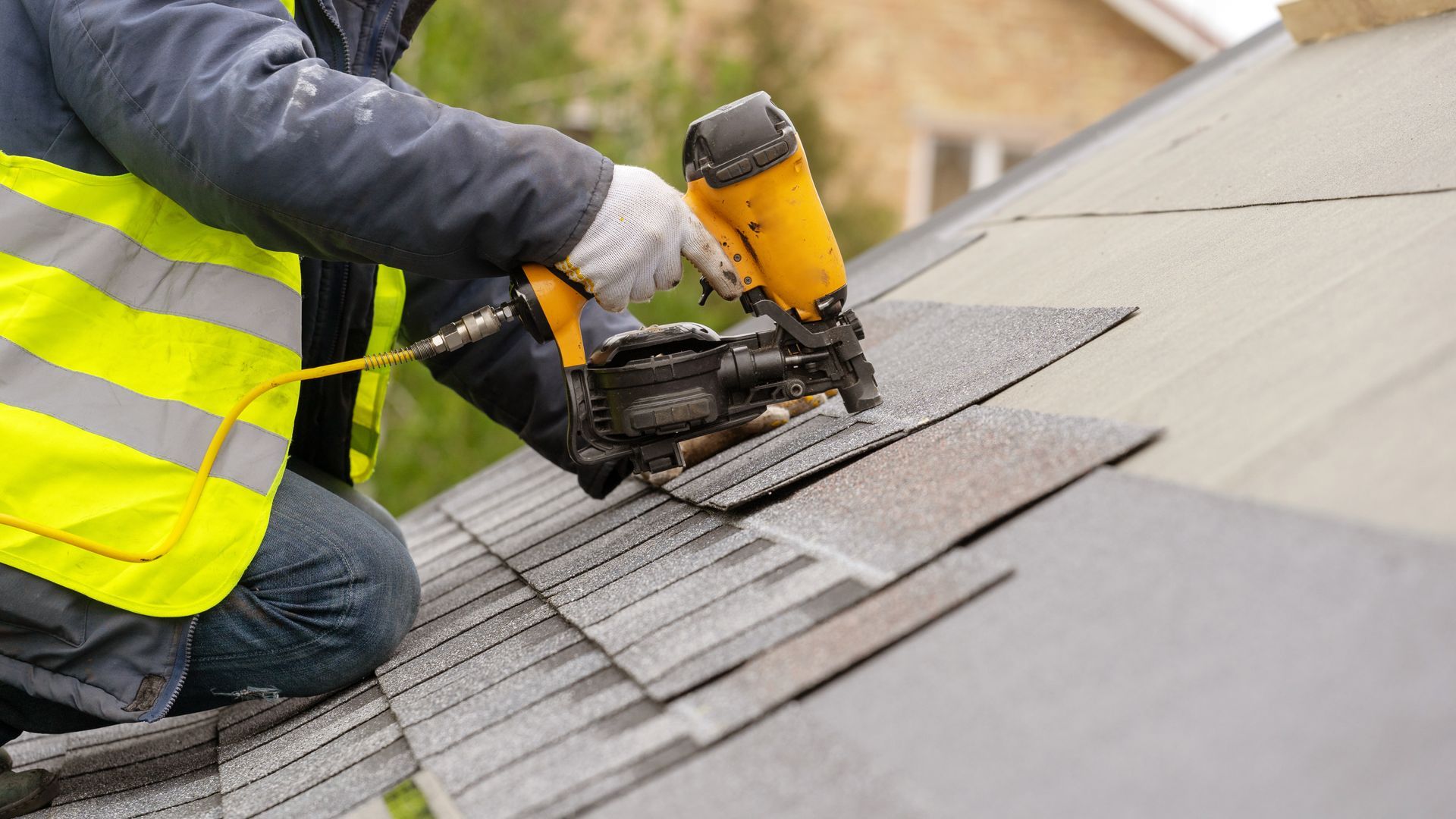
Deck sealing (e.g. use of deck tape to seal joints) to prevent water intrusion in high‑wind events.
Stronger fasteners or attachment methods compared to minimal building code requirements.
Edge protection, starter strips, proper flashing, hip & ridge caps, ventilation per standard.
In hail-prone areas, a “hail supplement” is required (shingles must pass an impact resistance test) to get the hail‑rated FORTIFIED designation.
Incentives & Geographic Eligibility
Some states offer incentives (insurance discounts, tax credits, grants) for FORTIFIED homes. Examples include Alabama, Louisiana, North Carolina, Mississippi, Oklahoma.
In other states, parts of the FORTIFIED upgrades may still offer benefits even if full FORTIFIED is not explicitly named in policy.
Benefits / Why Consider It
Greater resilience / durability — A home built to FORTIFIED standards is scientifically shown to be more durable under severe weather than homes built merely to code.
Reduced risk of damage — by sealing vulnerable joints, using better fasteners, and ensuring better component integration, a FORTIFIED roof can reduce leaks, shingle loss, and structural damage in storms.
Financial incentives — as mentioned, insurance discounts, grants, or tax credits are available in certain jurisdictions to encourage resilient construction.
Peace of mind / marketability — homeowners may value the assurance of a certified, above‑code roof system; it can be a selling point in regions susceptible to storms.
Caveats, Challenges & Things to Watch
Certification & compliance dependence — The value of FORTIFIED depends heavily on proper, certified installation and documentation. If any part of the system is weak (bad flashing, improper fasteners, poor ventilation), the designation or its benefits could be at risk.
Cost — Because the system has stricter requirements and uses more premium components, the cost is likely higher than a standard roof.
Availability / complexity — In some areas, certified contractors or the necessary materials may not be readily available.
Lifespan of company / standards — In the long term, if a manufacturer or installer goes out of business, maintaining or verifying compliance may become more difficult. Some industry voices caution about being “locked in” to special systems.
Doesn’t prevent all damage — No roof is invulnerable. The FORTIFIED standards reduce risks and damage, but extreme events (e.g. tornado, flying debris) may still cause damage.
For insurance/communities, the goal is to reduce storm damage, claims, loss, and increase resilience in high-risk areas.
SPECIAL NOTE: AAA lists a “Fortified Home Discount (Homeowners only)” among its possible discounts in Michigan.
If you are interested in having a strong FORTIFIED Roof, check with us on the requirements and our logistics in setting up your home in the spring of 2026.
Recent Posts